


Surgical Instrument Quality Checks for Acute Care Units
Surgical Instrument Quality Checks for Acute Care Units: Operational Protocols & Inspection Standards
In acute care units, surgical intensive care units (SICUs), and emergency operative suites, rapid intervention leaves zero tolerance for mechanical instrument failure. A jammed hemostatic forcep, a dull Metzenbaum scissor, or hidden micro-corrosion inside a lumen can turn a routine bedside cutdown or emergency laparotomy into a catastrophic event.
Establishing rigorous **surgical instrument quality checks for acute care units** safeguards patient outcomes, ensures compliance with international accreditation standards (such as ANSI/AAMI ST79 and ISO 13485), and significantly extends tool service longevity.
—
1. Physical and Visual Inspection Under High Magnification Surgical Instrument Quality Checks
Before any tray assembly or sterilization packaging, every surgical device requires tactile evaluation combined with minimum **3x to 5x optical magnification** under balanced cool lighting.
Detection of Surface Degradation Surgical Instrument Quality Checks
* **Pitting & Crevice Corrosion:** Look for microscopic black pits along joint hinge recesses and box locks. Pitting compromises passivation layers and serves as a bacterial reservoir.
* **Micro-Cracking & Stress Fractures:** Inspect ratchets and serrated jaws under stress. High-repetition mechanical flexing creates microscopic fractures near box joints.
* **Plating & Coating Integrity:** Ensure that tungsten carbide (TC) inserts or titanium nitride coatings show continuous adherence without peeling or hairline demarcations.
—
2. Quantitative Mechanical Function Testing Surgical Instrument Quality Checks
Subjective “feel” is insufficient for acute care readiness. Technicians and surgical nurses must apply objective mechanical standards:
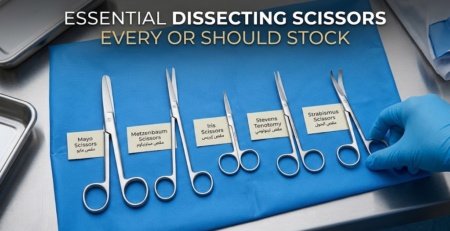
Surgical Scissors Sharpness Verification Surgical Instrument Quality Checks
Never test medical scissors on gauze or standard paper. Use calibrated testing material matched to scissor length:
* **Scissors > 4.5 Inches:** Must achieve 3 clean, snag-free cuts through calibrated red test latex/film across the proximal, middle, and distal tip thirds.
* **Scissors ≤ 4.5 Inches:** Must cut smoothly through calibrated yellow test film down to the extreme tip without pinching or bunching.
Hemostatic Forceps and Clamps (Box Lock & Jaw Tension)
1. Close the instrument to the first ratchet tooth and gently tap the finger ring against a solid surface; it must not spring open unexpectedly.
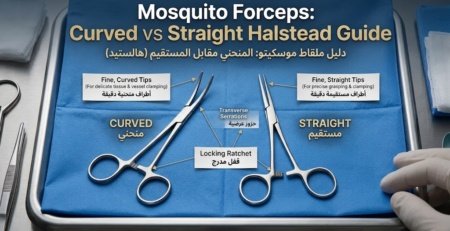
2. Inspect opposing serrations under magnification: teeth must intermesh completely without lateral yaw or scissor-crossing.
3. Box locks must glide freely without gritty resistance or loose lateral play.
Needle Holders (Grip and Latch Integrity)
* Clamp a 22-gauge surgical suture or a standardized testing strip into the center of the jaw.
* Latch to the second ratchet position. The needle holder must maintain a non-slip grip; manual pull force should not dislodge the wire.
—
3. Residual Bioburden and Chemical Cleanliness Audits
Sterility cannot occur without absolute chemical and physical cleanliness. Acute care trays must undergo randomized, documented soil audits:
* **Protein Residue Swab Testing:** Rapid colorimetric swabs detect sub-microgram residual protein inside internal channels and jaw serrations within seconds.
* **Lumen Soil Verification:** Long flexible swab tests ensure bone debris, dried blood, or lipid films have not adhered to cannula bores.
* **Water Spotting vs. Oxidation (The Eraser Test):** Differentiate mineral stains from active rust using a standard medical pencil eraser. If the mark rubs away clean, it is harmless mineral spotting; if pitting remains, the instrument must be immediately quarantined.
—
4. Standard Quality Audit Framework for Acute Care Surgical Sets
| Component | Inspection Frequency | Failure Criterion | Corrective Action |
| :— | :— | :— | :— |
| **Surgical Scissors** | Every reprocessing cycle | Film snagging or lateral blade deflection | Professional precision regrinding or immediate replacement |
| **Hemostats & Clamps** | Every reprocessing cycle | Ratchet slip upon light impact | Quarantine for realignment or rivet replacement |
| **Micro Cannulas & Suction Tubes** | Weekly destructive/chemical swab | Visible protein or lumen obstruction | Ultrasonic bath reprocessing or lumen retirement |
| **Electrosurgical Instruments** | Every cycle prior to tray wrap | Pinholes or micro-tears in dielectric coating | Complete recoating or instrument disposal |
—
5. Partnering with Certified Surgical Suppliers in Egypt
Reliable acute care operation depends heavily on the base metallurgical standard of your surgical instrumentation. **Alreda Medical** delivers hospital-grade surgical sets manufactured to rigorous European CE and ISO 13485 standards.
With over two decades of supply chain leadership from Kasr El Aini, Cairo, Alreda Medical supports healthcare facilities, emergency wards, and procurement officers across Egypt with certified stainless steel instruments, comprehensive replacement warranties, and technical procurement consultation.
For institutional catalogs and surgical equipment quotations, contact our engineering and supply team at **31 El Rashidy St, Kasr El Aini, Cairo** or connect directly via WhatsApp at **+201156644476**.
For trusted guidance on surgical safety, see the WHO Surgical Safety Checklist.
Frequently Asked Questions (FAQ)
1. How often should surgical instruments in acute care units be inspected?
Every surgical instrument must undergo visual and tactile inspection during every reprocessing cycle prior to sterilization. Additionally, quantitative mechanical testing (such as sharpness and ratchet tension) should be verified by sterile processing personnel before assembly.
2. Why shouldn’t surgical scissors be tested on gauze or paper?
Testing surgical scissors on gauze or standard paper dulls the fine cutting edges and can cause micro-deflections in the blades. Standardized testing materials, such as calibrated latex or polyurethane test film, should always be used to ensure accurate sharpness evaluation.
3. What is the difference between mineral staining and active rust on surgical steel?
Mineral stains are surface deposits from hard water or autoclaving chemicals and can be wiped away using a standard pencil eraser without pitting. Active rust involves metallurgical corrosion that leaves permanent black pitting underneath, requiring the instrument to be quarantined immediately.
4. When should needle holders or hemostatic clamps be retired from acute care service?
Instruments must be retired or sent for realignment if the ratchet springs open upon light impact, if there is lateral jaw misalignment, or if tungsten carbide (TC) inserts show signs of hairline cracking, chipping, or wear that causes sutures or needles to slip.

Leave a Reply