

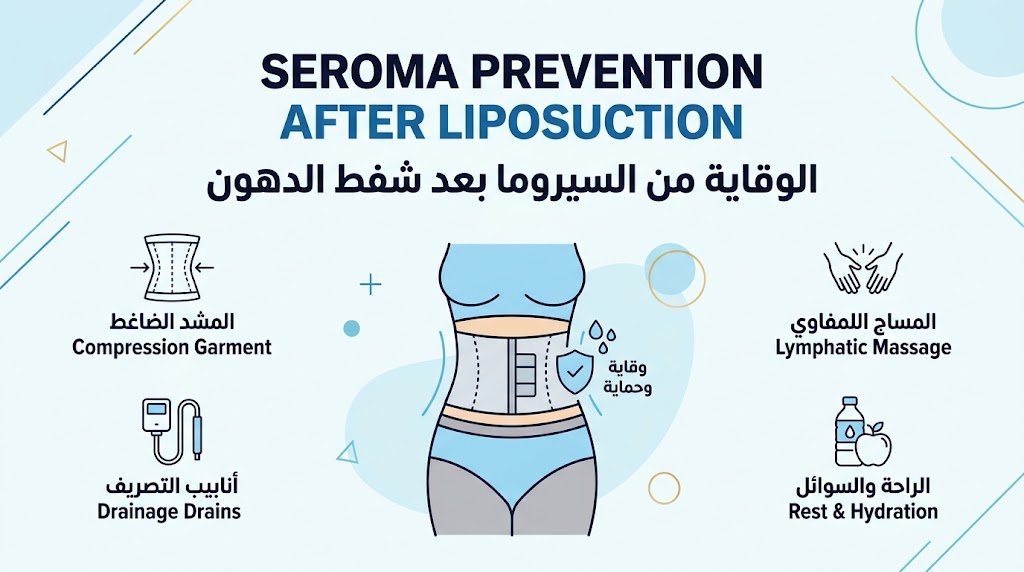
complete guide to seroma prevention after liposuction
Seroma Prevention After Liposuction: Complete Surgical and Instrumentation Guide
Postoperative fluid collection, primarily seroma formation, represents one of the most frustrating complications encountered in aesthetic body contouring and high-definition liposuction procedures. Although minor seromas may resolve spontaneously or through serial office needle aspirations, chronic or refractory seromas create serious clinical hurdles. They prolong patient morbidity, create aesthetic surface irregularities, heighten secondary surgical site infection risks, and significantly delay wound contracture.
A successful strategy for seroma prevention after liposuction must begin intraoperatively through tissue-sparing dissection, atraumatic cannula dynamics, and meticulous obliteration of subcutaneous dead space. Understanding fluid dynamics and selecting compliant surgical instrumentation manufactured to certified international tolerances transforms post-surgical recovery trajectories.
—
1. Pathophysiology: What Causes Post-seroma prevention after liposuction ?
A seroma is an encapsulated, non-purulent collection of serum, liquefied adipocytes, and lymph residing inside an artificially created tissue pocket. When performing body contouring, aggressive mechanical disruption separates subcutaneous adipose sheets from deep muscular fascia, triggering several interconnected pathophysiological mechanisms:
Lymphatic Channel Shearing
The superficial and deep lymphatic networks of the trunk run parallel to major neurovascular bundles. Inadvertent transection of these micro-vessels via blunt or sharp cannula tips leads to continuous interstitial weeping that overwhelms the body’s intrinsic drainage channels.
Mechanical Friction and Thermal Injury
Repeated mechanical strokes without appropriate tumescent lubrication create thermal and frictional tissue burns. These micro-tears provoke an aggressive inflammatory response characterized by elevated exudate production and vascular hyperpermeability.
Persistent Subcutaneous Dead Space
When extensive undermining creates open void zones under loose skin flaps, gravitational forces pool fluid in dependent areas such as the lower abdomen, sacrum, and flanks. Without mechanical adhesion, the pocket matures into a pseudo-bursa lined with fibrous pseudomembranes that resist non-surgical closure.
—
2. Advanced Intraoperative Protocols for Seroma Prevention After Liposuction
Preventing fluid accumulation requires methodical surgical execution across each operational phase:
Standardized Super-Wet and Tumescent Fluid Delivery
Uniform infiltration with a chilled, epinephrine-supplemented Klein solution (1:1,000,000 ratio) is paramount. Hydro-dissection separates delicate tissue planes, while prolonged vasoconstriction reduces both intraoperative blood loss and reactive plasma extravasation.
Preservation of Retinacular Fibers and Fascial Planes
Surgeons should avoid indiscriminate cross-tunneling across superficial zones. Preserving intermediate vertical fibrous septae maintains architectural anchor points between the deep fascia and the dermis, accelerating post-procedural flap re-adhesion.
Progressive Tension and Flap Quilting Sutures
In large-volume body contouring or combined lipoabdominoplasty, eliminating dead space through progressive tension quilting sutures stabilizes undermined tissue flaps against underlying muscular walls, reducing seroma incidence by up to 80%.
—
3. Surgical Cannula Selection and Engineering Tolerances
The geometry, metallurgy, and port design of surgical cannulas directly determine the degree of tissue trauma and subsequent seroma formation. Utilizing high-performance surgical steel ensures consistent surgical precision.
Atraumatic Blunt-Tip Geometry
Sharp or semi-sharp cannulas increase shearing forces on lymphatic channels. High-precision rounded bullet tips deflect vascular pathways and peripheral nerves without crushing delicate stromal boundaries.
Multi-Hole Port Configurations (Mercedes and Basket Cannulas)
* **Mercedes Cannulas:** Three circumferential lateral ports balance negative suction pressure evenly across 360 degrees, preventing localized suction spikes that tear vascular networks.* **Basket Cannulas:** Excellent for fibrous revision fields, basket apertures dissect dense adipocyte clusters without tearing overlying deep dermal fibers.
* **Toledo Multi-Aperture Cannulas:** Ideal for delicate sculpting near superficial anatomical landmarks, minimizing dermal friction burns.
Material Integrity: 316L Surgical Steel and Mirror Passivation
Cannulas fabricated from certified medical-grade 316L stainless steel offer high tensile rigidity with zero structural deflection under high negative pressures. Electro-polished, mirror-finished lumens prevent adipose protein buildup and micro-drag along tissue tunnels.
—
4. Dead Space Obliteration and Surgical Drainage Systems
When fluid production outpaces natural lymphatic clearance, surgical drainage remains the primary defense:
Closed-Suction Negative Pressure Reservoirs
For procedures extracting more than 3,000 mL of aspirate, perforated silicone round or flat fluted drains should be placed in dependent pockets. Closed negative suction maintains apposition between tissue layers until lymphatic recanalization occurs.
Clinical Criteria for Safe Drain Removal
Drains must remain active until total fluid production falls below 25 to 30 mL over a consecutive 24-hour cycle. Premature removal remains a leading cause of secondary rebound seroma formation.
Medical-Grade Compression Regimens
Custom-fitted compression garments incorporating dense foam liners apply calibrated external pressures (typically 20 to 30 mmHg). This uniform counter-pressure counters hydrostatic forces, stabilizes tissue flaps, and minimizes edema.
—
5. Technical Comparison: Instrument Specifications for Tissue Protection
| Instrument Category | Standard Instrument Feature | Precision Hospital-Grade Feature | Direct Clinical Impact |
| :— | :— | :— | :— |
| **Infiltration Cannulas** | Standard welded single-hole tip | Multi-aperture spiral distribution tip | Ensures rapid, uniform hydro-dissection with minimal needle passes |
| **Harvesting Cannulas** | Rough interior bore / sharp bevels | Mirror-polished bore / calibrated blunt tip | Reduces lymphatic shearing, friction burns, and seroma risks |
| **Needle Holders** | Smooth stainless steel jaws | Tungsten Carbide (TC) gold-ring serrated inserts | Guarantees non-slip grip during deep fascia progressive tension suturing |
| **Drainage Kits** | Rigid PVC tubing with open ports | Radio-opaque medical silicone flat fluted tubes | Minimizes tissue irritation and ensures continuous negative-pressure suction |
—
6. Sourcing Certified Plastic Surgery Instruments in Egypt
Equipping operating theaters with precision instrumentation is critical to optimizing clinical outcomes and minimizing surgical morbidity. **Alreda Medical** provides plastic surgery departments, teaching institutions, and specialized surgical facilities across Egypt with international-grade surgical instruments.
Headquartered in Kasr El Aini, Cairo, Alreda Medical maintains comprehensive stocks of certified liposuction cannulas, infiltration sets, and precision surgical steel instruments meeting rigorous CE mark and ISO 13485 standards. With dedicated B2B logistics, verified replacement warranties, and complete instrument customization, our team supports surgeons in delivering unparalleled operative care.
For technical instrument catalogs and institutional supply quotations, contact our surgical equipment specialists directly at **31 El Rashidy St, Kasr El Aini, Cairo** or reach out to our wholesale department via WhatsApp (+201156644476).
For more information about surgical safety, see the World Health Organization’s Surgical Safety Checklist.

Leave a Reply